
How to Start a Sensual Massage Business – And Whether You Should

Updated: 6 days ago
Who This Article Is For (And Why Working With Women Is Different)
If you're thinking about starting a sensual massage business, it's worth pausing to consider whether this work genuinely suits you.
This article is primarily focused on sensual massage for women (and in some cases couples), offered by a male practitioner, based on my own experience.
If you’re approaching this work as a female practitioner, often working with men, the dynamics, assumptions, and safety considerations can be quite different. I’ve explored that in more detail here:👉 Thinking of Becoming a Sensual Massage Practitioner as a Woman?
That said, the core principles around clarity, boundaries, consent, and professionalism apply regardless of who you are working with.
One of the biggest mistakes I see men make when starting out is assuming that women booking sensual massage are approaching it with the same mindset and motivations as they would themselves. This is rarely the case. Understanding that difference, and staying genuinely client-focused, is one of the most important foundations of building a professional and trusted practice.
Sensual Massage as a Business
Starting a Sensual Massage Business can be a meaningful, rewarding and well-paid profession, but only when it’s approached with skill, integrity, and a genuinely client-centred mindset.
I offer professional sensual massage training and support for practitioners who want to work with women, and in some cases couples. I receive a lot of enquiries from people curious about this work, some for the right reasons, and some not. Practitioner training also represents a significant investment of time and money. Before making that commitment, I think it is worth pausing and having a genuinely honest conversation with yourself, not only about your motivations, but also about what you expect to happen afterwards.
Completing your training does not automatically create a successful business or bring clients through the door. Training gives you the foundations, but building trust, visibility, experience and a reputation takes time. A slow start does not necessarily mean the training was a waste of money, but unrealistic expectations can easily make it feel that way.
My intention with this article is not to discourage people who may be well suited to the work. It is to help you think carefully before investing, understand what building the business is likely to require and make that commitment with your eyes open.
And one thing is always true:
✅ To be successful, everything has to be focused on the client. Their comfort. Their consent. Their wellbeing. Their experience.
This guide will help you reflect honestly on whether this path is right for you, and what you need to take seriously if you want to build a sustainable and respected practice.
While this article focuses on working with women, the same client-first, boundary-led approach applies across the board, whether your clients are women, men, or couples.
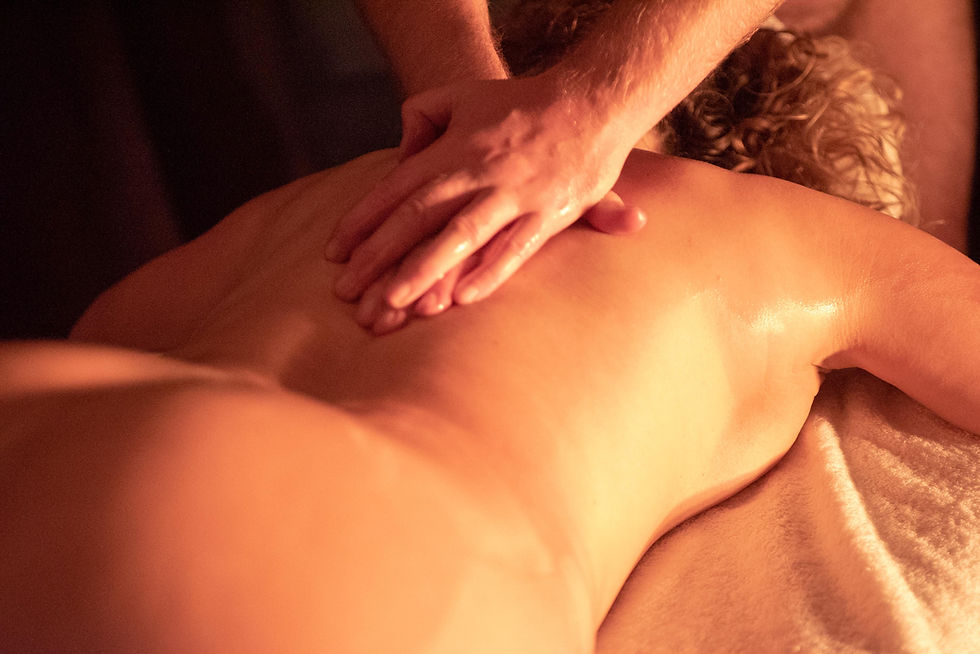
Is There Actually a Market for Sensual Massage?
Yes, there is a genuine market for professional sensual massage. Sensual Bodyworks has grown into a successful business, and there are other established practitioners offering sensual massage and related forms of bodywork across the UK.
But how big your market could be is a much harder question to answer.
It will depend on where you are based, whether you are male or female, who you want to work with, the services you offer, whether you work from a fixed location or travel, your pricing, and the amount of time and effort you are prepared to put into building the business.
Being able to give an excellent sensual massage is obviously important, but the massage itself is only part of the picture.
Before someone can experience your massage, they first have to find you. Then they need to understand what you offer, feel that it is right for them, trust you enough to make contact and ultimately feel comfortable enough to book.
That means your website, marketing, photographs, communication, boundaries, professionalism, reviews and reputation can be every bit as important to the success of the business as your massage technique.
In terms of earnings, there is certainly potential to make a good income, but I would be wary of anyone promising specific figures. What you can earn will depend on your pricing, location, availability, reputation and ability to attract and retain clients. It's also important not to confuse the hourly rate for a massage with an hourly wage, running the business involves marketing, enquiries, preparation, cleaning, administration and potentially travel as well as the time spent with clients.
It's also worth thinking more broadly than individual massage appointments. As a business develops, there can be opportunities to add complementary services and income streams. Sensual Bodyworks, for example, has developed beyond one-to-one massage to include couples experiences, practitioner training, events and online content. What makes sense for one practitioner won't necessarily make sense for another, but the business doesn't have to begin and end with selling individual massage sessions.
A lack of practitioners in your area can represent an opportunity, but don't automatically assume that little competition means lots of unmet demand. Equally, seeing several established practitioners shouldn't necessarily put you off, their presence may demonstrate that a market already exists.
So yes, there is genuine business potential, but training is only the starting point. Building a successful practice means learning how to deliver an excellent experience and how to build a professional, trusted business around it.
Is This a Business or a Lifestyle?
One of the most important questions to ask yourself is whether you want to build a business or simply enjoy sensual massage as part of your lifestyle. Neither choice is wrong, but you need to be honest about which one you are making.
You can, of course, have other interests and business commitments, I certainly do. However, if you want to become genuinely successful in this field, sensual massage cannot be something you occasionally fit into one day a week. It needs to be a priority, with consistent time given to clients, marketing, administration, training and the continual development of your practice.
There is another, less obvious reason why commitment matters:
the novelty needs time to wear off.
Sensual massage can initially feel exciting simply because it is new and intimate. If you only practise occasionally, that novelty may remain part of its appeal, and clients are likely to sense it.
More importantly, you may be more likely to misread a situation, make poor decisions or allow professional boundaries to become blurred. This does not necessarily come from bad intentions; excitement, inexperience and a desire for a session to develop in a particular direction can all affect your judgement.
When this becomes your regular work and you are seeing 30 or 40 clients each month, the initial novelty settles. You learn to remain grounded, recognise situations more clearly and maintain consistent boundaries without being distracted by the intimacy of the work. What remains is the reality of the profession: being fully present, exercising sound judgement and giving every client the same care and respect.
That is when you discover whether you are genuinely suited to this work, rather than simply attracted to the idea of it.
Who This Work is NOT For
This section is here to save you time, protect clients, and protect the reputation of the work.
Sensual massage is not a shortcut to “easy money” or an excuse to get intimate access to women.
This work is NOT for you if:
❌ You mainly want to be around naked or vulnerable women: If your primary motivation is access, excitement, power or sexual gratification, this will come through in your energy, your communication and your touch.
❌ You’re hoping to be “paid to get laid”: Some people approach sensual massage like escorting without saying it out loud. You might get a few bookings early on, but this doesn’t build a real business unless you have exceptional skills, charm, looks and emotional intelligence, and even then, it’s not a stable model.
❌ You only want clients you find attractive: If you’re only interested in working with women who match your personal preferences, you’re not offering a professional service, you’re filtering for your own benefit. Clients will sense this, and it’s a red flag.
❌ You can’t handle clear boundaries and consent conversations: This work requires maturity, communication, and the ability to hear “no” without ego.
❌ You feel entitled to sexual energy or a ‘reward’ for your service: Clients should never feel like they owe you anything. Not emotionally, physically, or sexually.
❌ You struggle to manage your own arousal: Arousal can happen, that’s human. But if you can’t stay calm, grounded, and professional, you’re not ready to work with clients safely.
❌ You want to hide completely and avoid accountability: Discretion is one thing. Total secrecy is another. If you’re building something real, it needs to be trustworthy, consistent and grounded.
If any of these hit a nerve, that’s not necessarily shameful — but it is information. It’s a sign you may need further personal work, clearer boundaries, or a different direction.
The Self-Check: Are You Right for This Work?
1) Is this about the client… or is it about you?
Be honest with yourself:
Are you genuinely interested in supporting clients through sensual, respectful touch?
Do you feel good about creating safety, relaxation, confidence and pleasure for them?
Are you motivated by being of service, not by taking something for yourself?
There’s nothing wrong with enjoying your work, but if your motivation is primarily personal gratification, clients will sense that quickly, and you’ll struggle to build long-term trust.
2) Will you accept bookings from all types of clients?
A key question that reveals whether you have a professional mindset:
Would you take bookings from clients of all ages, sizes, appearances, abilities and backgrounds?
If your honest answer is:
“Only if I find them attractive”
“Only if they’re my type”
“Only if they look a certain way”
…then the focus is not truly the client, it’s your preferences.
Even if a client fits your chosen demographic, selective acceptance sends the wrong message and will be a red flag for many. Women often book sensual massage because they want a space where they feel:
✅ safe
✅ unjudged
✅ respected
✅ relaxed
A professional service doesn’t work like dating.A professional service is built on care and consistency.
3) Do you have a real, professional setup?
When clients book sensual massage, they’re taking a risk, emotionally as well as physically.
A professional service needs to feel credible and reassuring.
Consider:
Will you have a fixed, professional address?
Is it clean, safe, welcoming and comfortable?
Does it feel discreet without feeling secretive?
It’s absolutely possible to offer a visiting service, but having a real base location gives reassurance that you’re established and professional, and it helps clients relax before they even arrive.
4) Are you building trust through transparency?
Some practitioners want to stay completely hidden: fake names, vague profiles, no verifiable details.
A certain amount of discretion is understandable, but too much secrecy can send the message that:
this work is shameful
you’re not accountable
you might disappear if something goes wrong
Ask yourself:
Will you use your real name (or at least a consistent professional identity)?
Clients don’t need your whole personal life, but they do need to feel you’re a stable, trustworthy human being who stands behind the service.
5) Would you be able to tell people what you do?
You don’t need to shout about it publicly, but it’s important to check your relationship with your own work.
Ask yourself:
If a close friend or family member asked what you do, could you tell the truth calmly?
If you feel you must hide it completely, that conflict can show up in subtle ways:
awkwardness
mixed messages
inconsistent boundaries
discomfort around consent conversations
fear of being “found out”
Clients pick up on these things quickly. Confidence builds trust.
6) Consent is not optional: it’s the foundation
If you want to work professionally with clients (and especially women), consent must be clear, confident and consistent.
You need to be able to:
explain what your service is (and isn’t)
set expectations before the session
check in during the session without making it awkward
respond calmly to “no” or hesitation
never pressure or push
make it easy for the client to change their mind at any time
Good consent skills don’t just keep people safe, they make sessions smoother, more relaxing, and more enjoyable for the client.
7) Trauma-awareness matters more than you think
Many clients seeking sensual massage have complex feelings around touch, intimacy and receiving.
You may work with clients who carry:
body shame
relationship pain
nervousness around sensuality
past coercion or boundary violations
sexual trauma (diagnosed or not)
Trauma-awareness doesn’t mean you’re doing therapy, but it does mean you understand how to avoid harm and create safety.
A trauma-aware practitioner knows how to:
slow down
read signals without assumptions
avoid pushing past uncertainty
keep the client in control
support regulation rather than overwhelm
This is one of the biggest differences between practitioners who get “one-off” bookings… and practitioners who build a trusted reputation.
8) Managing your own arousal professionally
This is an important topic that many people avoid, and it shouldn’t be taboo in practitioner training.
Sensual massage can naturally involve attraction, intimacy, and physiological responses. Arousal can happen, and it does not automatically mean you’re doing anything wrong.
What matters is how you handle it.
A professional practitioner can:
stay calm and grounded
keep the focus on the client’s experience
avoid seeking personal gratification through the session
maintain a respectful, steady presence
keep clear energetic and physical boundaries
Ask yourself honestly:
Can I stay professional even if I feel arousal?
Can I manage my body without making it the client’s responsibility?
Can I prevent my arousal from turning into pressure, expectation, or “needing” something back?
Clients should never feel like they have to “look after you”.
The skill here is containment: staying present, respectful, and in control of yourself, even when the work is sensual.
9) What clients look for when choosing a male practitioner
One of the best ways to succeed in this work is to understand how the experience feels from the client’s side.
Women are not only booking “a massage”.They are booking a feeling:
safety
trust
warmth
professionalism
reassurance
respect
If you want deeper insight into what builds trust (and what puts clients off), read this guide:
10) The truth about building a successful sensual massage business
This work is not “easy money” if you want to do it properly.
Successful practitioners typically have:
emotional maturity
strong communication skills
reliability and consistency
clear boundaries and policies
excellent hygiene and presentation
genuine care for the client experience
Clients come back (and refer friends) when they feel:
✅ relaxed
✅ respected
✅ unpressured
✅ safe
✅ seen and supported
Not because the practitioner is trying to “get something out of them”.
Your Personality Matters More Than You Might Think
Massage skills matter, but in sensual massage the practitioner is also an important part of the experience. Clients aren't simply choosing a massage technique; they're choosing someone they are going to trust in a very personal and intimate setting.
Being warm, approachable and confident without being pushy matters enormously. So does being able to engage naturally with people from very different backgrounds and life experiences. A broad knowledge of the world, curiosity about different subjects and, above all, a genuine interest in people can be surprisingly valuable.
You'll meet clients of different ages, professions, cultures, lifestyles and relationship backgrounds. Being able to find common ground, hold an interesting conversation and listen without judgement helps people relax and builds rapport. Knowing when not to talk is equally important.
For many clients, the conversation before and after their massage is part of the overall experience. Being able to talk withsomeone rather than simply at them, and being genuinely interested in what they have to say, is difficult to fake.
What About Age and Appearance?
Age and appearance may matter rather less than you might initially imagine. This isn't an escort business, and for most clients youth, a particular physique or conventional good looks aren't the main reasons for choosing a practitioner.
Presentation matters, of course, but trust, personality, professionalism, experience and how you make someone feel can be much more important.
In some cases, being older can even be an advantage. Life experience, confidence, patience and emotional maturity can all help clients feel more at ease.
So don't automatically assume you're the “wrong” age or don't have the right look. There isn't one ideal sensual massage practitioner. What matters much more is whether the clients you want to work with feel comfortable, safe and drawn to the experience you offer.
Final Thought: Client-first always wins
If you want to offer sensual massage professionally, the mindset is simple:
You are not there to take. You are there to give.
If you want to learn more about this, I would recommned reading about the Wheel of Consent.
You’re providing an experience built around the client’s comfort, boundaries and wellbeing.
If you can do that with integrity and skill, this can become a powerful and rewarding career.
If you can’t, or if your motivation is mainly self-serving, it won’t last, and it may cause harm.


